
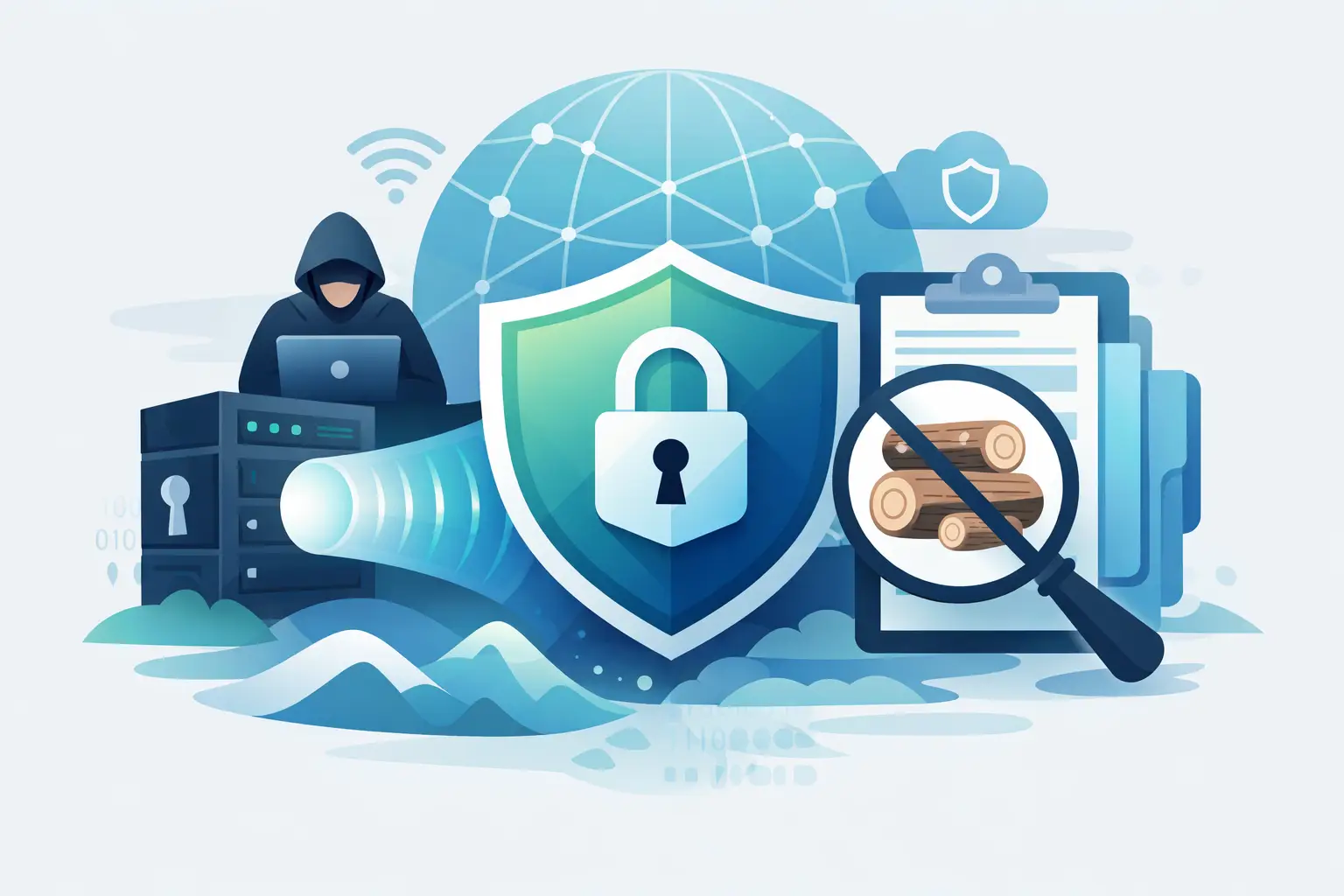
If you are asking is a no logs VPN safe, you are already asking the right question. A no-logs claim sounds reassuring, but privacy is not built on a slogan. It is built on what a VPN can technically see, what it chooses to store, and whether its systems are designed to protect you when things go wrong.
Is a no-logs VPN safe by default?
Not by default. A no-logs VPN can be very safe, but only when the claim is backed by real infrastructure, strong encryption, and independent verification. If a provider says it keeps no logs but still leaks DNS requests, exposes your IP when the connection drops, or runs vague data collection in the background, the promise starts to fall apart.
The safer way to think about it is this: no-logs is one part of a privacy system, not the whole system. It matters because it reduces the amount of identifiable information a provider can retain. But your actual safety depends on the full setup, from encryption protocols to app behavior to how transparent the company is under scrutiny.
What no-logs actually means
A true no-logs VPN should not store activity records that can tie your browsing behavior to you. That usually means no history of the sites you visited, no records of your source IP address, and no timestamps detailed enough to reconstruct your sessions.
That said, not every provider uses the term the same way. Some mean they do not log browsing activity, but they still collect connection metadata, device identifiers, or diagnostic information. Some keep temporary operational data and call themselves no-logs anyway. That does not always mean they are lying, but it does mean the wording can hide important differences.
For regular users, the key issue is simple. If the provider suffered a breach, received a legal demand, or had an internal failure, how much could it actually hand over? The less it stores, the less there is to expose.
Why a no-logs policy alone is not enough
A privacy policy is easy to publish. Secure architecture is harder.
A VPN can claim no logs and still leave you exposed if it lacks basic protections. If the app has no kill switch, your real IP can appear the moment the VPN drops. If DNS requests are handled poorly, websites and network operators may still see what domains you are trying to reach. If outdated protocols are used, your encrypted tunnel is not as strong as it should be.
That is why safe VPN use comes down to layers. No-logs matters. So do AES-256 or similarly strong encryption, modern protocols like OpenVPN and IKEv2, private DNS, leak protection, and a kill switch that reacts immediately. These are not bonus features. They are part of the trust equation.
The signs that a no-logs VPN is actually safe
The strongest sign is independent verification. When an outside auditor reviews a provider’s systems and confirms that logs are not being retained in a meaningful way, the claim carries more weight. Trust is stronger when it is tested.
The second sign is clear technical detail. Safe VPN providers explain what they do and do not collect, which protocols they support, how their DNS is handled, and what happens if the VPN connection fails. Vague language is a warning sign. Precision is better.
The third sign is product behavior. A safe VPN should make privacy work quietly in the background. The app should include a reliable kill switch, prevent DNS and IPv6 leaks, and give users control without forcing them to become network engineers.
Jurisdiction also matters, but less than many people think. People often focus only on where the company is based. That matters, but a provider with a verified no-logs architecture is in a stronger privacy position than a provider in a friendly jurisdiction that quietly stores more data than it admits.
When the answer to “is a no logs VPN safe” is no
Sometimes the answer is no, and the reasons are usually easy to spot once you know where to look.
If the company refuses to explain its logging policy in plain language, that is a problem. If the app requests unnecessary permissions, that is a problem. If the service has no audit, no kill switch, no leak protection, and no real transparency about its infrastructure, that is a problem.
Free VPNs are where this risk shows up most often. Running a VPN network costs money. If a provider is not charging users, it may be monetizing data, injecting ads, limiting security features, or cutting corners on infrastructure. Free does not always mean unsafe, but it raises the standard of proof. Privacy products should not depend on blind faith.
Another concern is logging by exception. Some providers claim no logs under normal conditions but collect extra information for fraud prevention, troubleshooting, or app analytics. Again, that is not always malicious. But if those exceptions are broad, the no-logs label starts to mean less.
Safety depends on your threat level
For most people, a good no-logs VPN is a strong upgrade for everyday privacy. It protects traffic on public Wi-Fi, makes ISP monitoring harder, masks your IP address from the sites you visit, and reduces casual tracking across networks. That is meaningful protection.
But there is a difference between everyday privacy and high-risk anonymity. If you are a journalist in a hostile environment, a political activist under active surveillance, or someone facing a sophisticated adversary, a VPN alone is not enough. You may need additional tools, stricter operational security, and much more caution about devices, accounts, and browser fingerprinting.
That is not a weakness of VPNs. It is just the reality that online privacy has layers. A no-logs VPN can protect a lot, but it cannot make you invisible if the rest of your habits reveal who you are.
What to check before you trust one
Start with the privacy policy, but do not stop there. Look for plain statements about what is not logged, not just what is collected. Check whether the provider has undergone an independent audit. See whether it offers OpenVPN, IKEv2, or similarly trusted protocols instead of relying on older options.
Then look at the protective features that matter in daily use. A kill switch is essential. Private DNS matters. Leak protection matters. Broad device support matters too, because privacy breaks down fast if your laptop is protected but your phone, tablet, browser, or smart TV is not.
Performance is part of safety as well. If a VPN is painfully slow or unreliable, people stop using it. That defeats the point. Strong privacy has to be practical enough to stay on.
This is where premium providers tend to separate themselves. A service built around zero-logs infrastructure, private DNS routing, kill switch protection, modern protocols, and wide server coverage is not just selling anonymity language. It is building a system meant to hold up under real use. That combination is what makes a no-logs claim believable.
The real standard: less trust, more proof
The best answer to “is a no logs VPN safe” is yes, if the provider can prove it in more ways than one. The policy should be clear. The apps should prevent leaks. The encryption should be strong. The kill switch should work. The company should be transparent enough that you are not guessing what happens behind the curtain.
That is the standard privacy-conscious users should expect now. Not marketing-first promises. Not technical buzzwords with no substance. Proof, safeguards, and infrastructure that reduce what can be seen, stored, and exposed.
A VPN should give you more control, not more uncertainty. If a provider treats privacy as a right and backs that promise with verified no-logs practices and solid protective features, it is doing the job you are paying for. LunoVPN is built around that model.
The smartest move is not to ask whether the words no-logs sound safe. It is to ask whether the service has done the hard work to make those words true.


