
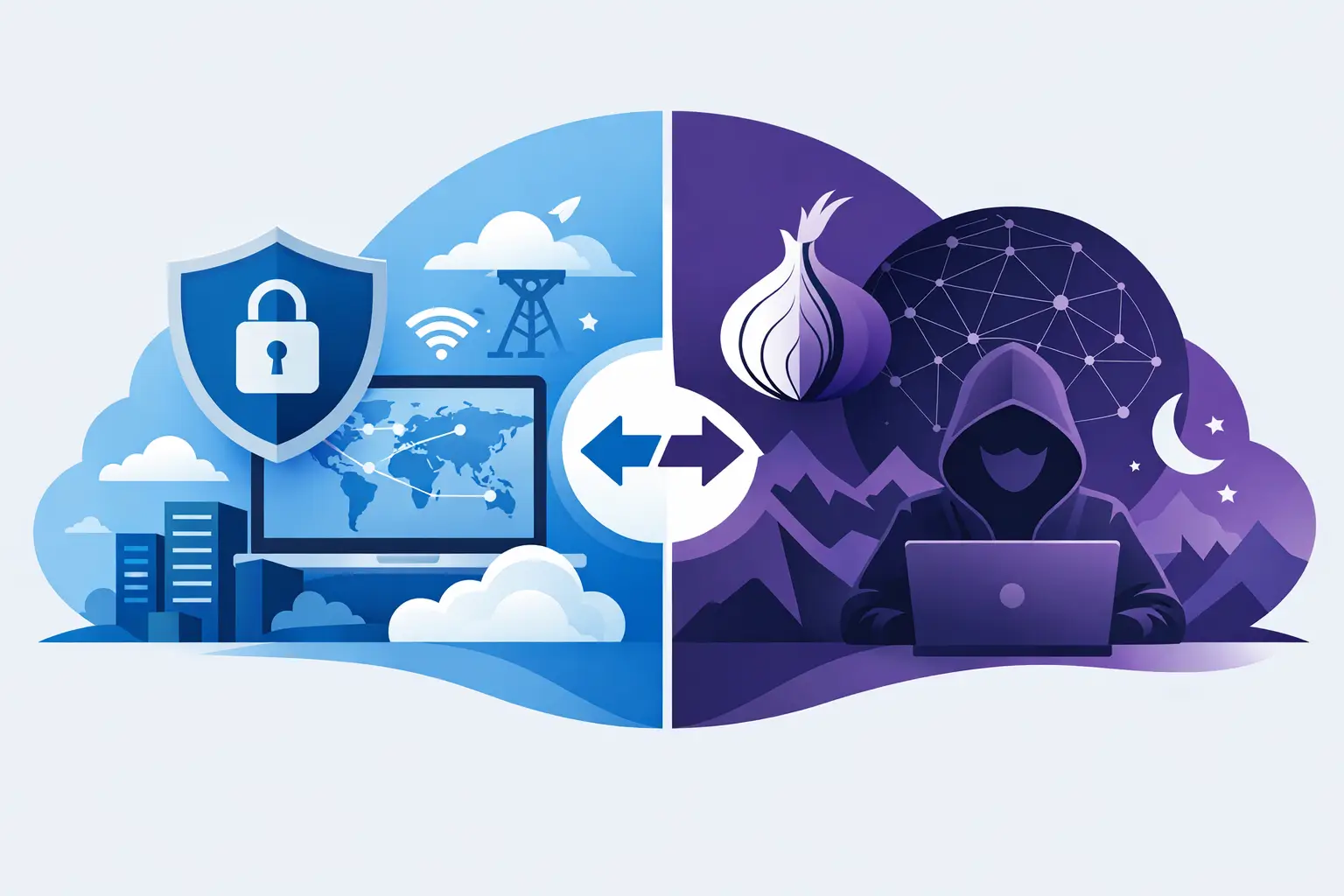
You open a browser on airport Wi-Fi, type a password, and wonder who else might be watching. That is where the vpn vs tor browser question becomes real. Both tools can hide parts of your online activity, but they do it in very different ways, and choosing the wrong one can leave you frustrated, exposed, or both.
If you want the short version, a VPN is usually the better fit for everyday privacy, streaming, travel, and safer browsing across all your apps. Tor Browser is stronger when you need higher anonymity and can accept slower speeds, limited compatibility, and a less convenient experience. The right choice depends on what you are protecting, who you are protecting it from, and how much usability you are willing to give up.
VPN vs Tor Browser: what each one actually does
A VPN creates an encrypted tunnel between your device and a VPN server. Your internet provider, the coffee shop Wi-Fi owner, and many network snoops can see that you are connected to a VPN, but they cannot easily inspect the contents of your traffic. Websites usually see the IP address of the VPN server instead of your real one.
Tor Browser works differently. It sends your browser traffic through multiple volunteer-run relays in the Tor network before it reaches the destination site. That layered routing is designed to make it much harder to trace your browsing back to you. Tor Browser is built for anonymity first, not comfort or speed.
That distinction matters. A VPN protects all or most of your device traffic, depending on your setup. Tor Browser mainly protects activity inside that specific browser. If you open another app outside Tor, that app is not suddenly anonymous.
Privacy is not the same as anonymity
This is where people often mix the two up. A VPN improves privacy by encrypting traffic and masking your IP address. But you still need to trust the VPN provider, because your traffic passes through its servers. A credible no-logs policy, private DNS, and leak protection matter here because they reduce the amount of data that could ever be exposed.
Tor Browser aims for stronger anonymity by spreading trust across multiple relays instead of placing it in one provider. No single relay knows the full path from you to the website. That design is useful if your threat model includes heavy surveillance or targeted tracking.
But Tor is not magic. If you log into your personal email, social accounts, or shopping profile through Tor, you are still identifying yourself. Anonymity tools help with network-level protection, not poor account hygiene.
Speed and convenience decide a lot
For most people, the biggest difference between a VPN and Tor Browser is not theory. It is how they feel to use.
A premium VPN is built for daily life. You connect once and keep using your phone, laptop, smart TV, streaming apps, and browser with minimal disruption. Speeds can still drop compared with an unprotected connection, but on a quality network the loss is often small enough that video calls, browsing, gaming, and streaming remain usable.
Tor Browser is slower by design. Your traffic passes through several relays, and those relays are not optimized for high-speed consumer performance. Pages may load slowly. Streaming is often poor. Large downloads can be painful. Some websites also challenge or block Tor traffic because exit nodes are public and sometimes abused.
If your goal is private browsing that fits into everyday life, convenience matters. Security tools only help when people actually use them.
Security trade-offs in the real world
A VPN is excellent for protecting your connection on public Wi-Fi, reducing ISP visibility, and lowering the chance of data interception on unsafe networks. It also helps prevent DNS leaks and can provide extra controls like a kill switch that cuts internet access if the VPN drops.
Tor Browser adds another layer of protection against tracking through network routing and browser hardening. It is intentionally designed to reduce fingerprinting and isolate browsing activity. That makes it attractive for users who face censorship, political monitoring, or serious privacy risks.
Still, both tools have limits.
A VPN does not make you invisible. Websites can still track you with cookies, browser fingerprints, and account logins unless you take additional steps. Tor Browser does not encrypt traffic between the Tor exit node and the website unless the site uses HTTPS. And because Tor depends on a special browser setup, changing settings, adding extensions, or using it carelessly can weaken the protection it offers.
VPN vs Tor Browser for streaming, travel, and daily use
For streaming and region switching, a VPN is the clear winner. It is built to change your apparent location while maintaining usable speeds. If you travel often, want more stable access to familiar services, or need safer browsing across hotel and airport networks, a VPN is the practical choice.
Tor Browser is a poor fit for entertainment or general convenience. Many streaming platforms block it, and the performance is usually too slow for a good experience anyway. Tor can help you reach the open web under restrictive conditions, but it is not designed to be your all-purpose content access tool.
That is why most mainstream users end up preferring a VPN. It protects more of their traffic, works across devices, and asks for fewer compromises.
Which one is better for censorship and surveillance?
This depends on the level of risk.
If you are dealing with routine tracking, insecure networks, or location-based restrictions, a VPN is usually enough and much easier to live with. It gives you encrypted traffic, IP masking, and broad device protection in a form that works quietly in the background.
If you are facing aggressive censorship or you need a stronger layer of anonymity for browser activity, Tor Browser can be the better tool. Its network structure is specifically designed to reduce traceability. The trade-off is usability, speed, and the fact that only Tor Browser traffic gets that protection.
For some advanced users, both tools may play a role, but that is where things get more complicated. Running Tor over a VPN can hide Tor use from your ISP, but it does not automatically make you anonymous, and poor setup choices can create new points of trust or failure. For most people, stacking tools without understanding the risks just adds confusion.
When a VPN makes more sense
Choose a VPN if you want always-on protection across your devices, safer public Wi-Fi use, access to region-specific content, and a faster, simpler experience. This is the best fit for people who want privacy without changing how they use the internet.
A strong service matters here. Features like no-logs infrastructure, private DNS routing, leak protection, modern encryption, and a kill switch are not marketing extras. They are part of what makes a VPN trustworthy in practice. A provider like LunoVPN is built around that everyday privacy model – secure browsing, reliable speeds, and control that does not demand technical expertise.
When Tor Browser makes more sense
Choose Tor Browser if anonymity for browser activity is your top priority and you accept the trade-offs. It is better suited for users who need to minimize traceability, avoid direct IP exposure through regular browsing, or reach information under restrictive network conditions.
Just be honest about what comes with that choice. Tor can be slow. Sites may block you. Downloads and streaming are poor. And if you step outside the browser or reveal your identity through your own actions, the protection shrinks fast.
The better question is not VPN or Tor. It is what risk you are solving.
If your biggest concern is hackers on public Wi-Fi, ISP monitoring, trackers, or accessing the internet more freely across devices, a VPN is usually the right answer. If your biggest concern is stronger anonymity while browsing and you are willing to move slower and more carefully, Tor Browser has a clear purpose.
Most people do not need the most extreme privacy tool. They need one they will actually keep on. Start there. Pick the protection that matches your life, not the one that sounds most intense.


